

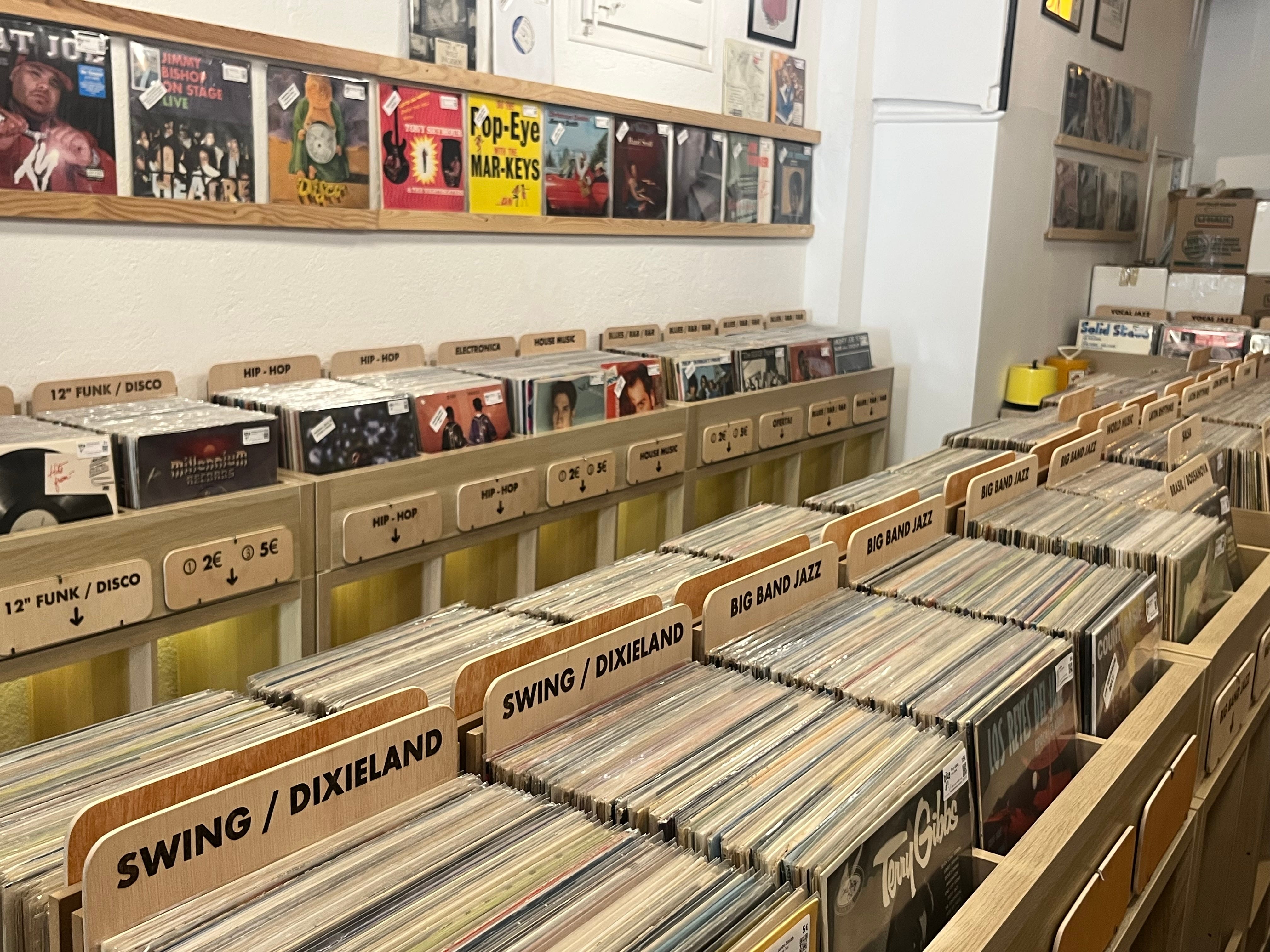
Bite It Records is tucked down in an alley, and not easy to find if you don’t know what you are looking for. When you get there, you’ll find thousands of original US and UK pressings, shelves filled with jazz, funk, soul, reggae and plenty of folk and rock too, if that’s more up your alley.
Pau is one of three owners. Before any of this, he played drums behind reggae legends out of Studio One: Alton Ellis, Ken Boothe, Derrick Morgan.
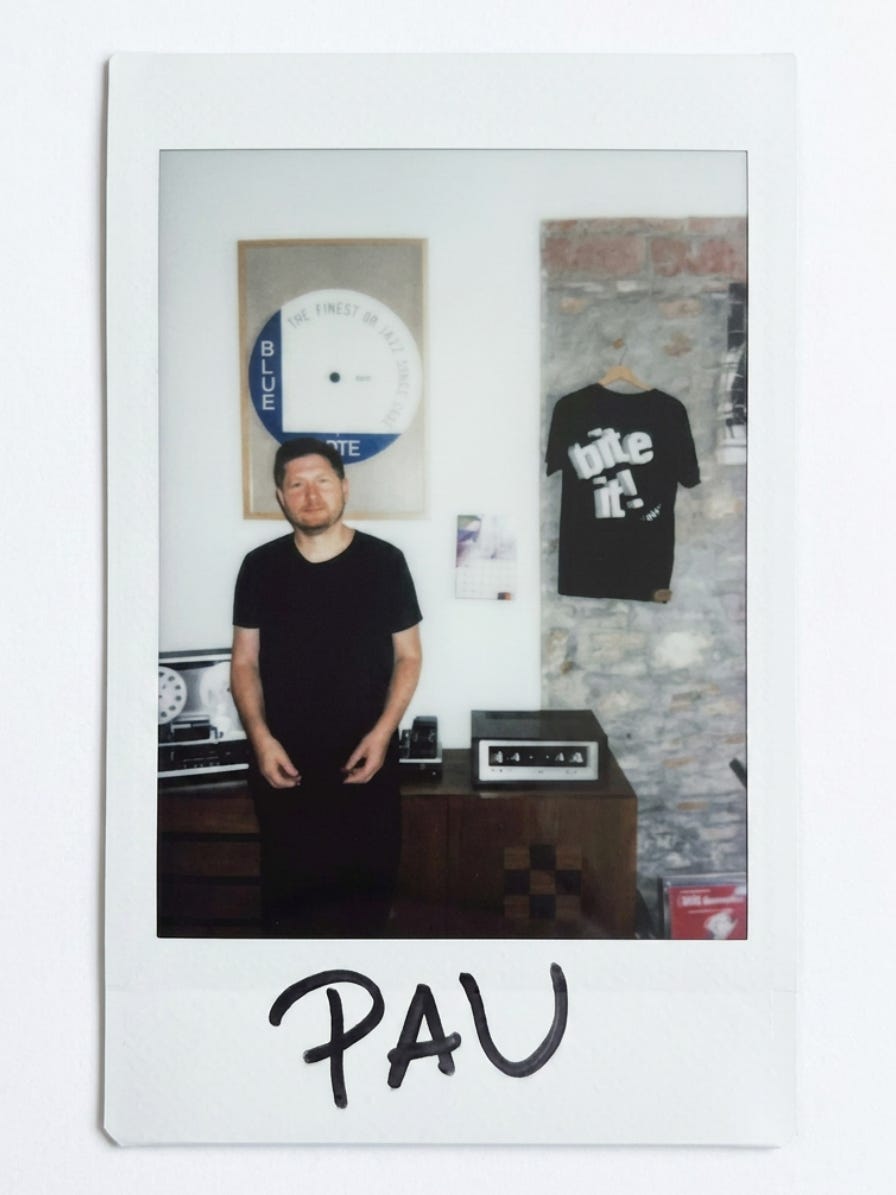
How did you end up opening the shop?
Pau: It’s a long story. I’ve been a collector my whole life, about thirty-five years now. I studied architecture at university, where I met Juan, who was also a musician. I toured the world playing music, but when I started getting tired of traveling, and had a son, I decided to follow through on an idea I’d been sitting on for a while: opening the record shop in Barcelona I’d always wished existed. I collected Black music on original pressings, and the shops in Barcelona just didn’t have the original American records from that era.
And how did that idea turn into the shop?
Pau: As a collector, whenever I found cheap records I’d buy them even if I already had them, just because they were cheap, that hoarding instinct collectors have. One day I realized I had a pile of duplicates. I sold them, used the money to buy records I didn’t have, and decided to give it a shot. I built a very rough website and suddenly saw things selling well, enough that I started thinking this could actually go somewhere.
My friend Juan lived in Canada for six years, we knew people there. I first went to the US to buy in ‘92, with my family, but I was already deep into records. For years we kept going and meeting people, and at some point we decided to start buying in volume, not just for ourselves anymore, just to see what would happen.
We started in a hidden co-working space, you had to call us to get in. It wasn’t an official shop, wasn’t visible from the street. Then the pandemic hit and rents dropped. We’d been running this appointment-only system for a while, so we decided to make it official and open a shop. That was five years ago. We rented a place nearby and the whole thing kept growing: more records, more customers. After three years, the landlord told us he wanted to sell the building. We didn’t want to buy it, so we found a bigger space. We’ve been here for two years now. It’s been a natural process of growing little by little, as the audience grows and the collection grows.
Why are original pressings so important to you?
Pau: There’s this endless debate about whether original pressings sound better. It’s not really about the audio, I do think they sound better, but to actually notice you need very good equipment, a good space to listen in, and a trained ear. It’s more of a collecting thing, like someone who collects art: they don’t look for a photocopy of a Dalí, they want the actual physical painting.
There are as many collections as there are collectors. I don’t care that much about the volume, I look for originals in perfect condition, that’s my standard. I like the original object, it carries its own story, and you need to hunt for it.
The shop is a reflection of our collections. The three of us are pretty similar, even if our collections differ a bit, but we all agree that if you’re spending the money, you should go to the source. I can only speak for myself, but it goes for Juan and Edgar too: we don’t know much about current music, we’d struggle to sell it because we couldn’t defend it. What I know is what I sell, and I know it because I buy it, because I collect it.
And when did you notice that shift? You started collecting pretty young, right?
Pau: Honestly, I started with this from the beginning. I started listening to music very young. I’m the youngest of three siblings, so I had a head start. By eleven, twelve, thirteen I was already listening to music, but what I started buying was reggae, which is the backbone of my life as a collector. I collect a bit of everything, but reggae is the core.
There have been a lot of reissues. But when I say original, I mean either the Jamaican pressing or the English one from the same year, since records often came out in both countries at once. We’re talking about singles here, which is basically the reggae format. It was almost as hard to find the original as a reissue. In some shops in England I used to go to, there were originals, I’m talking about the early nineties, prices were a different world back then. If someone hears this now and has only been buying for four years, they’ll think I was rich or something, but the prices have only gone crazy recently. Thirty-five years ago, or thirty, you could buy original records at a good price. I was also around people who already bought that original format, so I got into it naturally from the start, it’s not like I began with reissues and switched later. If I had to buy the part of my collection I have now, I couldn’t, given how prices are, but I bought it in the nineties, when it was a lot more affordable.
What kind of music did you play?
Pau: I played drums, mostly reggae. I don’t know if you ever stop being a drummer, but I quit eight years ago. I started at twelve or thirteen, around the same time I started buying records, and I played for twenty-five years. I did a few different things, but there was a good stretch where we had a backing band. For the European promoters, it was cheaper to just book the artist from Jamaica and hire a European band to do the tour. Even though there have been proper bands throughout reggae history, the norm was singers who worked with session musicians, and what people paid to see was the singer. If it was the Wailers, sure, you’d bring the band, but ninety-five percent of the music was the singer.
I imagine in reggae you also played a lot of percussion, not just drums.
Pau: We specialized in ska and rocksteady, not so much roots, which is where percussion carries more weight. Prince Buster, for example, with “Oh Carolina,” one of the first singles he put out on Blue Beat, is all percussion. We did some, but without a percussionist. I’ve always had a lot of respect for percussion. I studied Cuban percussion with a Cuban teacher, in Cuba, but I never studied percussion applied to reggae, and I don’t know if I would have dared to.
How was it to play with all your favorite musicians?
Pau: I started out listening to the foundations of reggae, the classics: Alton Ellis, Ken Boothe, Derrick Morgan, all the Studio One people. Eventually I ended up playing with some of them: Derrick Morgan, Ken Boothe, The Heptones, Alton Ellis. Singers I’d listened to my whole life, the founders of the genre, and suddenly there I was, playing with them.
Did you feel starstruck, playing with them?
Pau: Honestly, no, I’m not really a fan in a typical sense. I don’t have a single photo or a signed record from any of these people. I never asked, even though a lot of fellow musicians would tell me, “here, get this signed.” What I felt, more than nerves, was respect. These were people who’d invented what I’ve loved my whole life, and there I was this little white kid jamming with them.
Over time I noticed that the bigger and more legendary the artist, the kinder and more down to earth they were. Ken Boothe is one of the best voices in reggae, and in music in general. He’s also just a super gracious guy. Alton Ellis, whose records for Coxsone I grew up on, was just as normal. The younger the artist, on the other hand, the more attitude they had. The ones I idolized, the ones who gave me goosebumps, were the older ones. Their lives as singers were so routine to them that you gave them more credit than they gave themselves. You’d bring up a single and they’d go, “yeah, I recorded that in ‘67,” barely remembering it, and to you it was the perfect record.
Was it difficult to find the records you liked in Barcelona? Did you have to travel?
Pau: You had to buy by mail, not online, by mail. They’d send you a physical cassette with a few seconds of each song, and you’d order the records off the cassette: “this one, this one, this one, from these songs, send them to me.” Other collectors traveled too. When an original record physically showed up here, in Barcelona or Girona, it was a real treat, because it was genuinely hard to find.
As a collector and shop owner, do you remember your best and worst purchase?
Pau: I’ve bought most of the records in my life for a lot less than they’re worth now, thirty years ago, when everything was cheap. With Bite It, we decided from the beginning that whatever comes into the shop belongs to the shop.
I’ve bought all over the world, from Ethiopia to Iran, all over the US, Europe. In the early eBay days it was relatively easy to find very cheap records that were already expensive elsewhere. One thing was buying cheap because it was cheap at the time, but early on we were able to still find good deals when it was already expensive. Sometimes when you buy big collections, a record turns up worth maybe three thousand euros, buried in a lot that cost you almost nothing.
The opposite has happened too, not often, we’ve been lucky. I remember one time in particular, I bought a fairly big, fairly expensive collection, and what I received were the sleeves without the records. It was really disappointing, there were some very interesting records in that collection, and it turned out to be just the covers.
That’s a bit strange, it’s not that easy to find just the covers either.
Pau: That’s exactly why it never crossed my mind that it could be just the covers, because on top of that these were very hard-to-find records. It’s true that sometimes a record breaks and you keep the sleeve because you value the record, or it’s rare, or just expensive, you think, “I’ll keep the cover.” But there were so many, it was so strange, and it turned out to be true, it was just the covers.
Buying from abroad, often with the time difference with the US, forces quick decisions, and that’s exactly what happened here. The collection looked great, but there wasn’t enough communication and I just said “let’s buy it.” By the time we saw what it was, it was already too late. But weighing out all the luck I’ve had, the good outweighs the bad by a landslide.
Is there one record in particular you remember?
Pau: Maybe not the most spectacular ones, but the first ones, the ones that hit you hardest. I always remember two records from two different collections.
One is a Blue Note record, one of our favorite jazz labels. We bought a small collection, a bit blind. There were records that looked interesting, but the best part was what the seller never mentioned. Among those records turned up a Hank Mobley worth about twenty-two hundred euros, and it cost us next to nothing.
The other was the Led Zeppelin’s first record. Ninety-nine point nine percent of original sleeves have red lettering, but the true original is turquoise. The label printed a batch that way without consulting the band, who saw the color, stopped production, and switched to red. Very few made it to market in turquoise, and there are three variants depending on the matrix. One of those three turned up in another lot, unmentioned by the seller, and we sold it for a bit over two thousand euros.
Is there a place you wouldn’t expect to be great for buying records?
Pau: Bogotá surprised me. I used to go to South America a couple of times a year to play with different bands, and I’d use the trip to buy. The first time I went to Bogotá I slipped away from the band on days off, and there are these galleries around there with secondhand books, but also a lot of records.
There’s a ton of it. The thing is it’s hard to find ones in good condition there, a bit like Jamaica, another place that struck me as incredible for vinyl, though what they’re really similar in is the climate and the value people placed on records. These days they take better care of them, since they know what they’re worth, but back in the eighties or nineties that wasn’t the case, and with a tough climate the records haven’t held up well.
I started talking to people and everyone had records, tons of them. I don’t know if it’s politically correct to say, but people from Latin America, even without a lot of purchasing power, love their music, and a significant chunk of their money goes to records. This music was recorded in very short runs, and today it’s one of the hardest styles to find, apart from labels like Fania. Even so, we’ve bought a ton, because in Latin America people really value the format.
Do you see the same thing among the Latinos living in Barcelona?
Pau: These are people who spend money, who love it, who really know what they’re buying. You get all kinds in any genre, in jazz, in reggae, but with Latin music my impression is people know a lot, because they tie it closely to dancing, to community.
A jazz collector’s listening is more individual, more of a home thing, more relaxed music. Latin music, on the other hand, is much more communal. Records circulate, people talk about them, it’s more woven into daily life. I think that’s why there’s so much knowledge, and why people are willing to pay a lot for records.
Now there are three of you as partners. How do you divide the work between three people?
Pau: For us there’s a lot of work because ninety-five percent of what we sell are original records. We have to buy secondhand every single day in the US, England. That’s a lot of work.
There’s the big job of sourcing the material and getting it here, in pallets, not in a package, and then there’s the job of selling it. That means each of the three of us has assigned tasks. I’m the most visible one, because I’m the one in the shop. The other two are in Girona, where we have a warehouse. We had a shop there too for a while, now it’s just storage. There’s more of the management side that can be done from Girona, and the hands-on selling side, which is where I am.
Having three of us is also useful for decisions, because there’s never a tie. Either we all agree, or it’s two to one.
Do you have a network set up for sourcing records?
Pau: Yes, otherwise it would be impossible to have the records we have. You build relationships, you talk to people: at first, when you’re very young, you don’t make any real connections, but as time goes on, long before it occurred to us to open a shop, we already had people, we were already talking to people. If you go looking for records regularly, the sellers get to know you too, and they talk to you. Once the shop opened, all those people we’d been talking to for years turned out to be exactly the network we needed.
It’s not like we have five hundred people, but we do have a fair few, East Coast, West Coast, who are like our reps. They manage the records over there and help us out, otherwise it’d be really hard. There’s also people in England, where we source more records.
You started out selling on Discogs, right? I’m a fan and got my collection on there too, but I see the problem it creates for shops.
Pau: Discogs has been a disruptive force in this world, it’s got both sides of the coin. When it started, it wasn’t a marketplace, it was a place where people listed records, more like a reference site for research. If I remember right, the middle step was that you could mark something as owned or wanted, but not buy it. And the last step was it turned into a marketplace.
We started there too, especially when we didn’t have a physical shop and people didn’t have easy access to records. It was a really easy way for everyone to see your records and buy them if they were interested.
What happened once you opened the physical shop?
Pau: It got complicated. If you kept a record aside so shop customers wouldn’t see it, it was hard to find when someone bought it on Discogs; and if you pulled it off the floor, the people who come in every day, which is the real value of this business, never saw it.
Then there’s the “the record doesn’t sound like you said” issue. We had a policy of refunding, no questions asked, if someone complained. Sometimes it was true, sometimes it sounded a bit worse than I’d described, but once you’ve sold enough through Discogs you realize some people complain just to get a discount, because sellers try to avoid negative feedback.
It kept getting more complicated: shipping went up, fees went up, and at some point we decided to focus all our energy on the physical shop in Barcelona. It’s fine to have it, it’s a decent channel, but we sell in the shop, I prioritize the people who show up. Now, if a special record sits unsold for a while, we’ll sometimes list it, and we keep most singles up there, since it’s an easy format to ship, but generally we’re out.
What’s your take on what Discogs has done to prices?
Pau: Records have gotten more expensive, like everything. The problem is it puts shops and private sellers on the same footing. If you’re a shop, you’re at a disadvantage, because you’re carrying overhead and covering it by selling records. There’s real unfair competition there. A lot of shops, I think, raised prices a bit just to cover the fees PayPal and Discogs take.
And then on Discogs you can price something however you want, that doesn’t mean you’ll sell it. You can say “I’m selling this for a hundred,” but if it’s worth ten, you’re not going to sell it. The problem is if someone else has the same record and lists it at a hundred, someone else at a hundred five, someone else at ninety, and someone who doesn’t know any better comes along, sees one at a hundred and one at ninety, figures it’s worth ninety, maybe buys it for eighty. Suddenly a record which in reality was worth ten euros is worth eighty now.
There’s a genuinely good side to Discogs as a source of information, but as a buyer, the downside is prices have gone through the roof.
To finish up, what are your future plans?
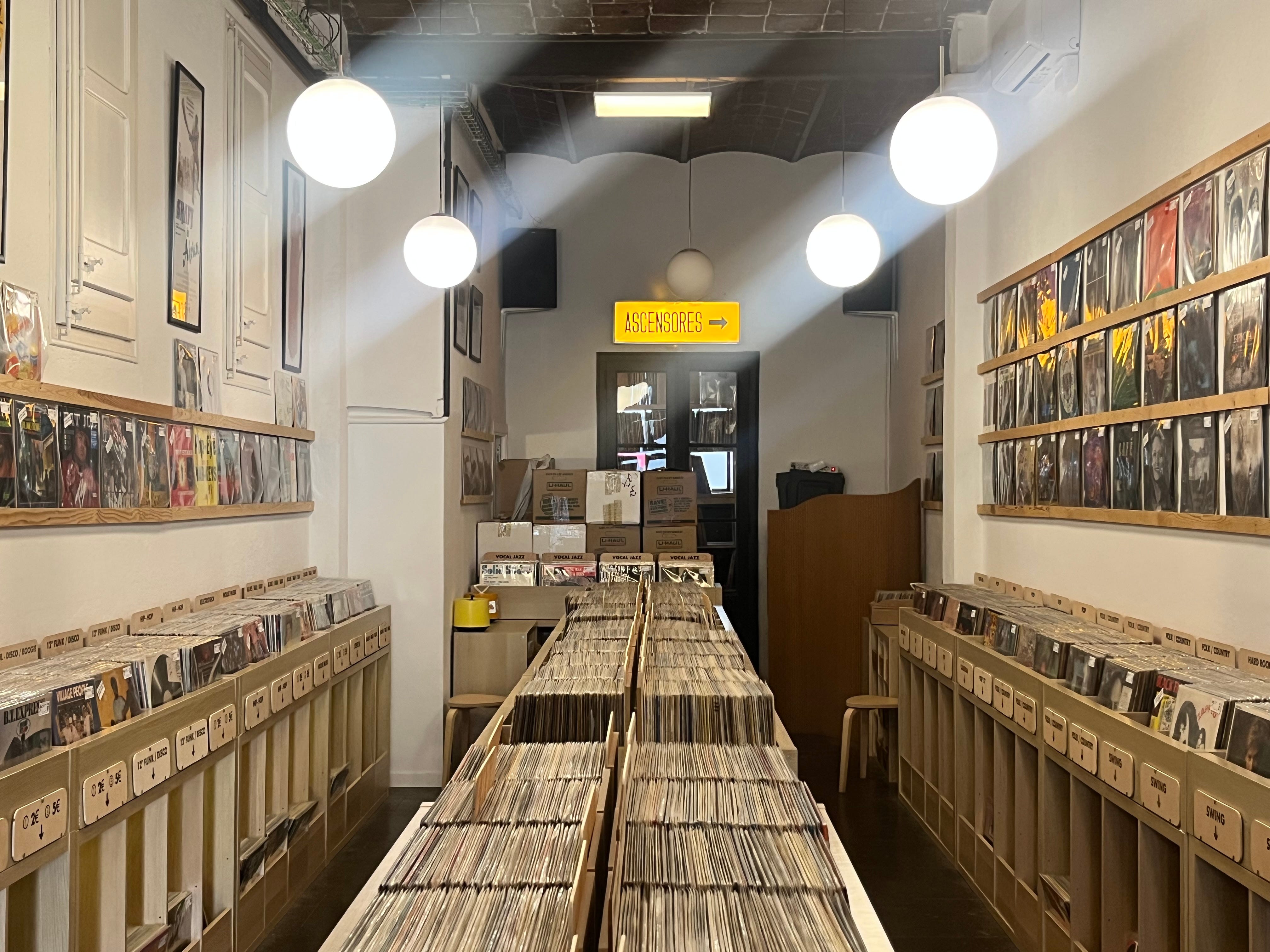
Pau: When we moved to this spot two years ago, we already looked for somewhere bigger, because we could see the shop was growing, and so far it hasn’t gotten too small for us. As long as that doesn’t happen, we love this shop, we love where it is, even though it’s on a dead-end alley, and if you’re not specifically looking for it, you’ll miss it. That’s what we thought, anyway, and then way more people showed up than we expected. We love the architecture of the space too.
Right now we don’t have any expansion plans: keep doing what we’re doing, more special records, nicer ones, grow sustainably, keep the wheel turning, more customers, more records. We’re not expansion-minded in that sense.
Perfect, hope everyone can come and see it for themselves. Thank you.
Pau: Thank you.
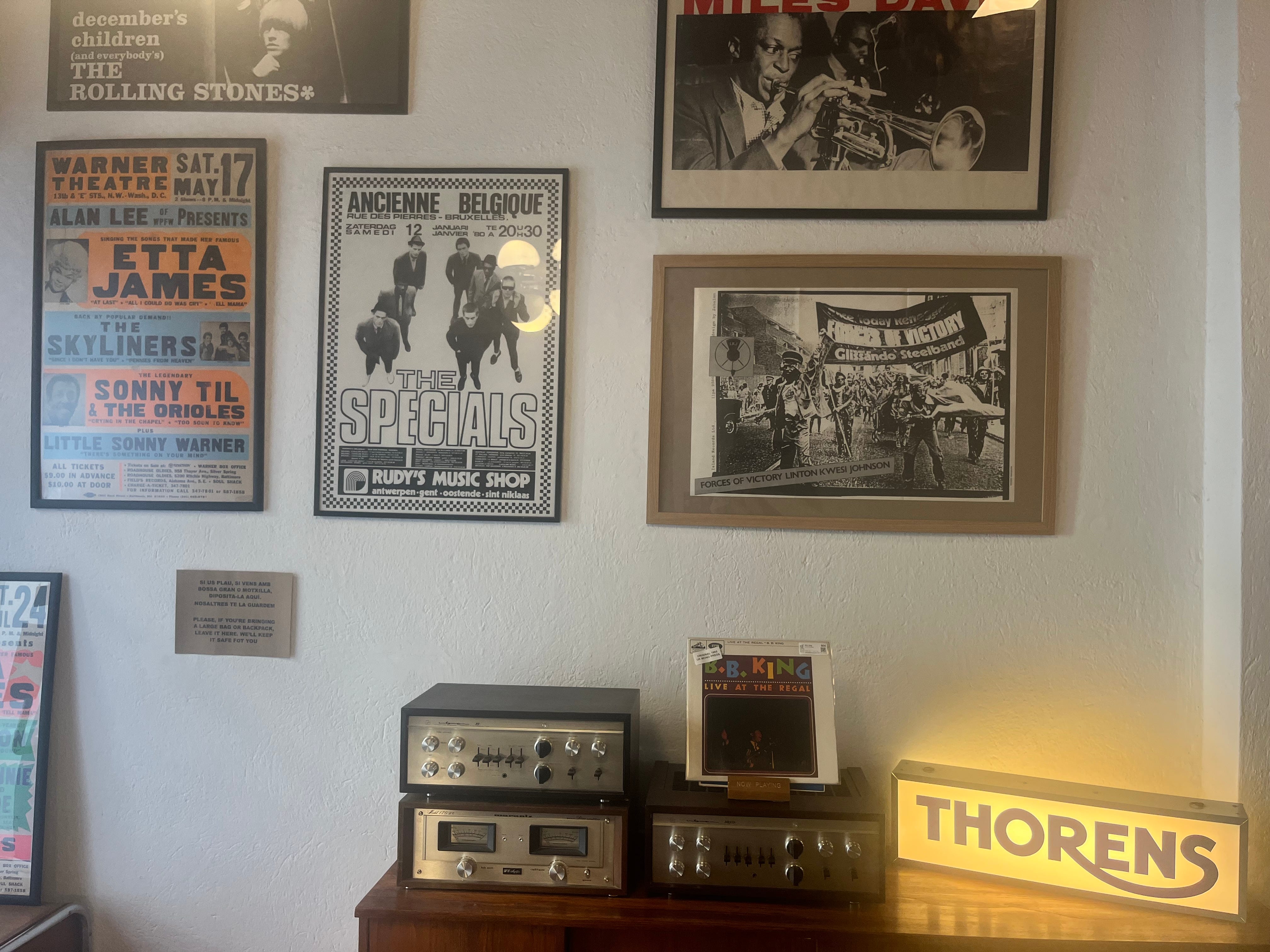
I promise I’m not in their PR department, but it’s one of my favorite shops in the city. Records are neatly categorized on wooden shelves, posters on the walls, vintage hi-fi equipment everywhere you look. If you don’t meet Pau behind the counter, you’ll talk with Jordi, a blues and jazz bass player, or MJ, horror punk fan and music photographer, both walking encyclopedias of Black music who run the shop’s listening sessions.
Come see for yourself, if I’m wrong I’ll buy you a coffee in Gràcia.
Bonus
📀 5 albums representing Bite it! Records